Keynote Speakers

Dr. Charles H. Bennett

Portrait of Dr. Charles H. Bennett

Affiliation: IBM Research

Talk title: The slippery slope of privacy

Biography: Charles H. Bennett is an American physicist whose research has shaped the foundations of quantum information science, quantum cryptography, and quantum teleportation, and who has played a central role in establishing quantum information science as a rigorous scientific discipline. After earning his Bachelor’s degree from Brandeis University and his PhD from Harvard University, Bennett joined IBM Research in 1973 (and still works there today), where he has spent his career exploring connections between physics (especially thermodynamics and quantum mechanics) and computer science (cryptography, computability, computational complexity, and information theory), to advance the theoretical and practical understanding of computation and quantum mechanics. He is a recipient of several prominent awards including the Wolf Prize in Physics, the Micius Quantum Prize, the BBVA Foundation Frontiers of Knowledge Award in Basic Sciences, and the Breakthrough Prize in Fundamental Physics. He is also a Member of the US National Academy of Sciences and a Foreign Member of the Royal Society. In March 2026, he was named a recipient of the 2025 ACM A.M. Turing Award for his foundational contributions to quantum information science and secure communication.

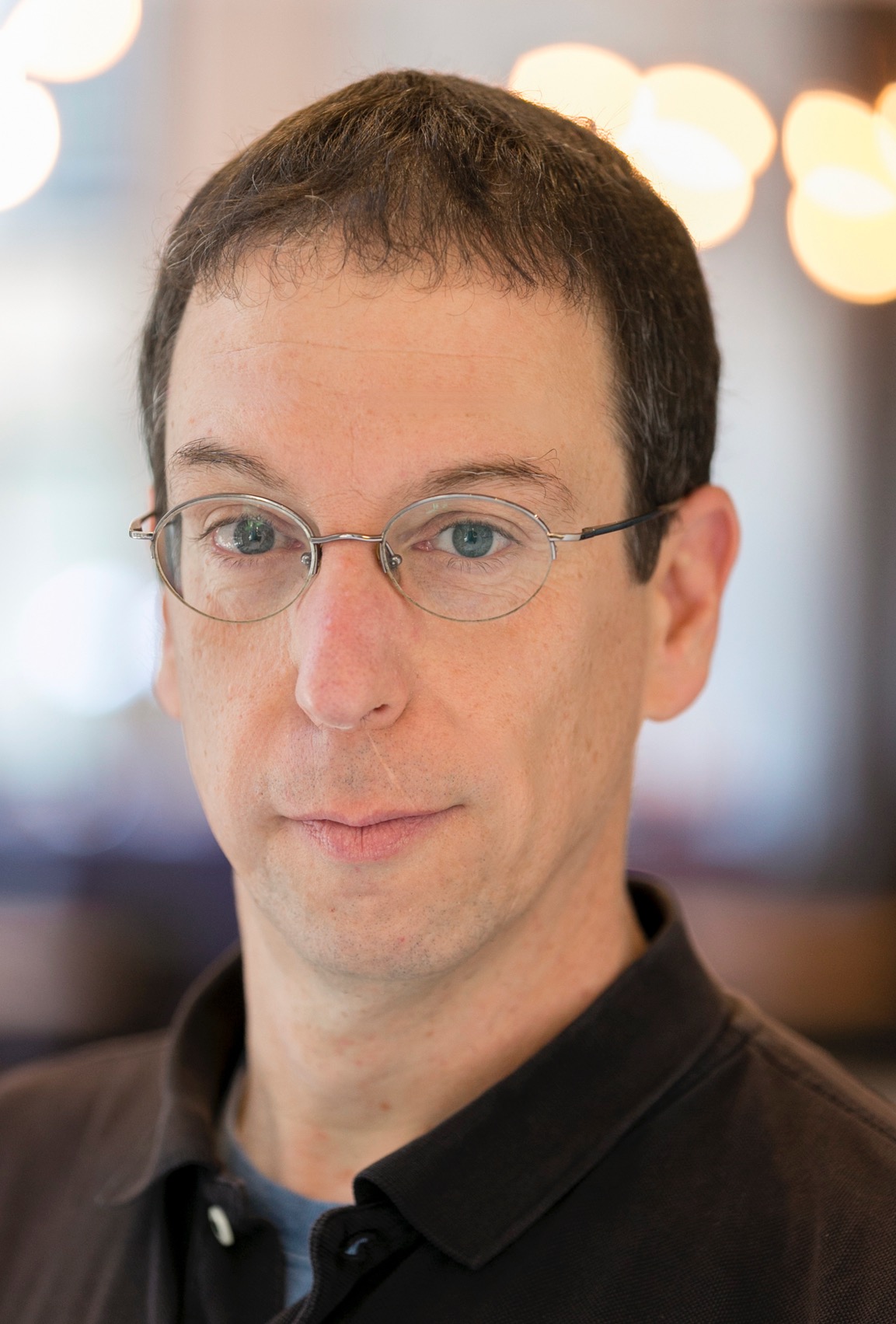
Dr. Renato Renner

Portrait of Dr. Renato Renner

Affiliation: ETH Zurich

Talk title: Randomness Is Not a Given

Abstract: Cryptographic protocols, whether post-quantum or quantum, usually assume that perfectly random bits are given. A source of perfect randomness, however, does not exist, not even in principle. I will explain the fundamental obstructions to generating perfectly random bits, and how quantum theory changes the picture. Results from quantum foundations, such as Bell’s theorem, allow us to generate fresh bits that are certified to be random. Quantum technology is, however, equally available to an adversary, who may use it to predict random bits that we would have considered secure.

Biography: Renato Renner is a Professor for Theoretical Physics in the Physics Department at ETH Zurich, where he leads research exploring the intersections of quantum information science and fundamental physics. His research interests span quantum information, quantum cryptography, and the foundations of quantum theory and general relativity. Renato studied physics at EPF Lausanne and ETH Zurich, graduating from the latter, and earned his PhD from the Department of Computer Science in 2005, focusing on quantum cryptography and the security of Quantum Key Distribution. Following his doctoral work, he spent two years as a postdoctoral researcher in the Department of Applied Mathematics and Theoretical Physics at the University of Cambridge. He returned to ETH Zurich in 2007 to start his own research group in Quantum Information Theory, where he has been a Full Professor since 2015.

Dr. Dan Boneh

Portrait of Dr. Dan Boneh

Affiliation: Stanford University

Talk title: Making blockchains post-quantum: risks, challenges, and the road ahead

Abstract: Quantum computing poses a threat to Internet protocols and to Blockchain systems. Securing Blockchains against this threat requires four steps: (i) agreement on a solution, (ii) deployment of the solution, (iii) adoption of the solution by Blockchain users, (iv) a rescue mechanism for users who did not adopt the safe solution in time. This talk will discuss some of the technical challenges with each one of these steps, and some recent progress. Along the way we will also discuss the impact of AI on the security of cryptographic systems.

Biography: Dan Boneh is a professor of Computer Science at Stanford University where he heads the applied cryptography group and co-direct the computer security lab. Professor Boneh’s research focuses on applications of cryptography to computer security. His work includes cryptosystems with novel properties, post-quantum cryptography, applications of cryptography to blockchains, and cryptanalysis. He is a recipient of the 2014 ACM prize and is a member of the National Academy of Engineering. Professor Boneh received his Ph.D from Princeton University.

Dr. Ramana Kompella

Portrait of Dr. Ramana Kompella

Affiliation: Cisco

Talk title: Quantum Needs a Network. The Network Needs to Be Quantum-Ready.

Abstract: Quantum computing will scale by networking quantum processors together, and today’s networks must be made ready for the quantum era. This talk covers both Cisco efforts. First, our work on scalable distributed quantum computing: a quantum network stack of switching hardware, entanglement protocols, and a circuit compiler, and our efforts bringing out quantum networking into real-world deployments. Second, our work on making classical infrastructure quantum-ready, from post-quantum cryptography migration to a more holistic observability, resilience and agility framework.

Biography: Ramana Kompella is currently a Cisco Fellow and Head of Cisco Research, where he leads a team of world-class researchers conducting research on emerging technologies of strategic interest to Cisco such as AI/ML, Quantum, Networking, and Cybersecurity. In his past experience, he was a co-founder and led engineering at Candid Alpha project that built the network assurance engine (NAE) for formal verification of data center networks. Past roles also include staff network architect at Google, and also co-founder/CTO at AppFormix (acquired by Juniper). Before that, he was a tenured Associate Professor at Purdue in the CS department where he led research on networking and systems. He holds a PhD degree from UCSD, MS from Stanford and BTech degree from IIT Bombay, all in Computer Science.

Dr. Ryan Babbush

Portrait of Dr. Ryan Babbush

Affiliation: Google Quantum AI

Talk title: The impending threat of quantum cryptanalysis

Abstract: This talk will cover recent developments in quantum algorithms for breaking elliptic curve cryptography and how these developments intersect with advances in quantum hardware and quantum error-correction. We will also explain the unique threat these capabilities pose to blockchains and hardware root of trust, and outline the steps the community can take to mitigate these vulnerabilities.

Biography: Ryan Babbush is the director of quantum algorithms and applications research within Google’s quantum computing effort, Quantum AI. Ryan has worked with Quantum AI since its founding in 2013 and joined the effort full time in 2015 after receiving his PhD in Chemical Physics from Harvard University. Ryan’s team broadly focuses on quantum algorithms with applications ranging from machine learning, optimization, and differential equations to cryptography.